How to Maintain and Care for Your Interiors Long After the Project Ends

There is one unique emotion that strikes after an interior project’s completion. The last worker leaves, all the furniture stands intact, and there’s that lovely new paint odor in the air. Walking through the rooms makes you feel “this is the home that I dreamt about”, isn’t it? But time passes, and here comes the other side. A few months pass by, and the sofa’s cushions become a bit worn out. There is one scuff on the laminate next to the table. Kitchen shutters do not move properly anymore, and the paint around the switchboards begins to fade due to regular contact with the hands. Gradually, slowly but surely, your perfect interior loses its sharpness.
It does not mean that it is a bad design or of poor quality. Neither does it happen all that often. As a commercial interior designer in Kerala, Brightech is really committed in providing quality products at a competitive price, so you don’t have to invest more in the maintenance process. Even though it’s merely a natural occurrence taking place once the real living process begins. So, the real question is, are you going to let it go or preserve it?
First Thing – Know The Space
When projects are handed over, a brief of the specifications of the material used and details about the available warranties will be given to you. Most people tend to put away the papers handed over and never read them again. This is a big mistake. Each area has its own set of materials used in the construction process – from laminates, veneers, to fabrics and surface treatments, all of which have their own ways of maintenance. Using a damp cloth on a wall that has a matte surface treatment and one with a washable eggshell finish, will have different after effects. Also, teak veneer panels do not withstand the same product used on bathroom tiles.
As a first step, invest about twenty minutes in learning more about the material makeup of your walls, floors, and other areas of your home. These details will be handed over to you if you have worked with the best interior design company in Kochi, Brightech, on the project. If there is any question left unresolved, calling our experts can help because after 35 years and 14,000 projects, we will not let anything go unanswered.
Furniture – The Most Used Part, Neglected Too

Furniture is something which worn out first, not because of its quality, but only because of the regular contact. Upholstered items require maintenance. Now, this is something that doesn’t cross anyone’s mind because seat cushions get compressed differently based on the seating position. Rotate or flip these cushions after a few months of use to avoid putting too much pressure in one spot. For upholstered sofas, the best maintenance practice is to vacuum the seams at least once a week. In the case of wooden items, moisture becomes a concern. In areas like Kerala, for instance, the change in season from dry to wet causes some expansion or contraction in furniture. This is fine. What you can do, is to run a dehumidifier during the most extreme months of monsoons. Another precaution is to keep your wooden items away from AC vents since air blowing straight at the material will cause the wood to dry faster.
Furniture only needs occasional inspection. After about half a year, check all screws and tighten the loose ones. In case you notice that hinges don’t turn as smoothly anymore, add a tiny drop of silicone lubricant, its simple as that.
Care for The Wall & Surfaces
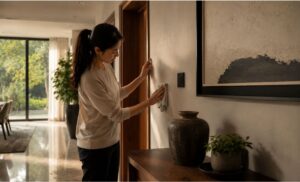
The majority of interior walls of the Indian home use either textured paints or smooth emulsions. Both of it will not withstand hard scrubbing. Gentle cleaning itself is enough. If you just want to remove a few stains here and there, using a damp cloth will help to get rid of them easily. But when the stain is harder to clean, e.g., from the kitchen or the bathroom door, use mild soap dissolved in water, or any other mild washing solution. The corridor and the places around the light switches are always dustier than other parts of the wall, therefore, they should be wiped once every two weeks or at least twice a month.
It is the tile and the tile grooves that cause trouble, especially in the bathroom or kitchen area. You may forget about it for some months and attack it with strong cleaners, but actually, it would be better to clean it once a week using a brush and a paste with baking soda. Acidic and other harsh chemical combinations are not recommended for products like marbles and granites, it may lead to color fading or loss of lustre.
The Invisible Factors – Air, Water & Light

The most potent factors that can result in the damage of interiors are not readily visible- Air, water, and light. The sun bleaches fabrics, fades wood, and affects the quality of glues used in laminate. Curtains and shutters have more purposes than purely aesthetic: they protect your house. Utilize curtains and shutters during the hottest parts of the day – when the sun is at the highest point, especially in west-oriented rooms. Ventilation is an important aspect that needs to be taken care of. Poorly ventilated rooms will accumulate moisture, which will influence not only the color of the paint on the walls but even the backing of wardrobes. Ensure rooms are always ventilated. If you see bubbles in your paint in the corner or notice an unpleasant odor in your wardrobe, take action, as the situation does not get better on its own. If your house is located in coastal regions, the air will have high salinity, which may cause corrosion to your interior parts. Steel and aluminum parts must be coated with appropriate paints or other coatings and must maintain it for keeping things safe.
Take Necessary Steps for Keeping Your Interior Fresh
A perfectly designed interior is not a finished product but a living organism that must be subjected to proper maintenance from time to time to ensure that it stays true to its original form. These practices don’t have to be complex. Just a few consistent actions, some knowledge about the materials used, and the readiness to address small problems before they become big ones are enough. Your house was made to match your lifestyle. Maintaining it is not about keeping it functional; it’s about appreciating the space you built for yourself.